Smart haircare is where beauty meets builtin intelligence: AI-powered scalp scanners, LED combs and sensor-equipped gadgets are transforming how we diagnose scalp conditions, track hair health and tailor routines. This article explains what these devices do, reviews the clinical evidence and safety certifications behind them, and gives practical guidance for choosing tools that deliver measurable benefits—backed by cosmetic-technology studies and device standards.
Smart Haircare 101: AI Devices, Scalp Sensors and How They Work
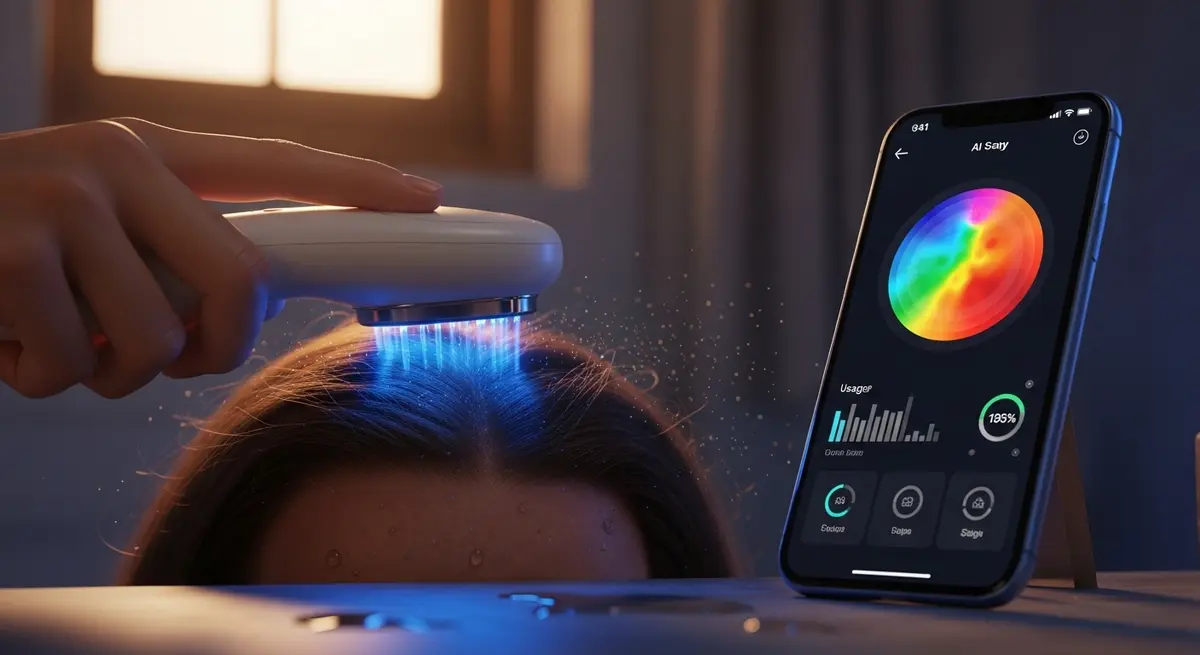
Smart haircare brings diagnostic-grade sensing and machine intelligence into everyday routines. At its simplest, smart haircare describes consumer devices that combine physical sensors (optical cameras, multispectral imagers, impedance electrodes, thermistors and motion sensors) with AI algorithms to measure scalp and hair status, track change over time and suggest personalized actions. These gadgets compress lab-style measurements—follicle counts, hair diameter, scalp moisture and signs of inflammation—into easy-to-read dashboards on a phone or a dedicated hub.
Core technologies power how these devices collect and interpret signals:
-
Optical and multispectral imaging. High-resolution cameras and multispectral sensors capture visible light plus narrow bands (near-infrared, red-edge) to reveal hair density, hair shaft thickness and scalp color/vascular cues. Multispectral data helps separate hair from skin, estimate pigmentation and detect subtle reddening that can indicate irritation or increased blood flow.
-
Impedance and capacitance sensors. Gentle electrical measurements across scalp patches estimate hydration and sebum levels by measuring how well the skin conducts or stores charge. Changes in impedance can reflect surface oiliness (sebum), barrier integrity and hydration status—useful for recommending washing frequency or moisturizing routines.
-
Temperature sensors (thermistors / IR). Localized temperature increases can flag inflammation, infection or post-treatment hyperemia. Continuous or spot thermal readings help contextualize symptoms after topical treatments, exercise, or LED sessions.
-
Accelerometers and motion sensors. Built into smart brushes and wearable clips, accelerometers quantify brushing motion, hair tugging, and the number of strokes. Paired with load sensors, they can estimate hair breakage events, shedding when combined with hair-capture designs, and brushing habits that might aggravate mechanical loss.
-
LED arrays and therapeutic emitters. Many devices double as treatment tools—low-level light therapy (LLLT) combs and helmets use specific wavelengths to stimulate follicles. Sensors inside the device often log usage and ensure the correct energy dose is delivered per session.
How AI turns raw signals into useful guidance
Raw sensor outputs—pixels, impedance values, temperature traces, accelerometer streams—are meaningless without processing. AI models applied in smart haircare perform several key steps:
-
Preprocessing and calibration. Algorithms normalize lighting, remove noise, and compensate for device-to-device variability. For electrical sensors this means filtering baseline drift; for images it means white-balance and geometric alignment.
-
Segmentation and measurement. Computer-vision models segment scalp versus hair, count visible follicular units, and estimate hair shaft diameter from cross-sectional or angled images. Signal-processing and ML regressors translate impedance and spectral signatures into estimates of hydration and sebum.
-
Feature extraction and longitudinal modelling. AI converts single measurements into clinically relevant features—hair density per cm2, average hair thickness, hydration index, redness score—and models trends across days or months to detect genuine change versus day-to-day noise.
-
Actionable insights and recommendations. The system maps measured features to user-friendly guidance: adjust wash frequency, switch to a lighter oil-control serum, increase LED sessions, or consult a clinician if progressive thinning is detected. Good models also quantify uncertainty and flag measurements that need professional follow-up.
Practical device types and daily consumer use-cases
-
Handheld AI scalp scanners (camera-based). Users scan sections of the scalp with a small wand; the paired app provides a follicle-count heatmap, mini-trichoscopy images and weekly trend graphs. Typical use-case: monthly checks to monitor thinning or response to topical minoxidil.
-
Smart brushes and combs (accelerometer + capture). A brush with motion sensors and a hair-capture reservoir can estimate daily shedding, track brushing force and reward gentler technique. Typical use-case: people worried about increased shedding can record daily brush sessions and share trend reports with their clinician.
-
Sensor-equipped headbands and caps (impedance + thermal). Worn for short sessions or overnight, these capture scalp hydration and temperature, useful for people adjusting new topical routines or testing product compatibility.
-
LED combs and helmets (therapeutic + usage logging). These devices deliver controlled low-level light while logging dose and session adherence. Typical use-case: thrice-weekly LLLT with app reminders and progress photos to track hair density gains over months.
-
Smart mirrors and kiosks (multispectral imaging + AI). Home smart mirrors or in-clinic kiosks provide high-resolution, multi-angle imaging for a full scalp audit and personalized regimen recommendations.
Why validation and standards matter
The value of smart haircare lies in reliable, repeatable measurements and honest translation into treatment actions. Cosmetic-technology studies and device-safety standards (FDA clearance or registration in some markets, CE marking in Europe, IEC/laser and electromagnetic compatibility standards for light-therapy gear) are the benchmarks to watch. Where clinical evidence exists—particularly for LLLT—randomized trials and meta-analyses help define realistic expectations. For sensing devices, peer-reviewed validation studies or manufacturer-provided validation against clinical-grade trichoscopy increase confidence that the device’s AI is measuring what it claims.
Realistic expectations and everyday integration
Smart haircare devices excel at monitoring and personalization: they spot trends earlier than the naked eye, quantify regimen adherence and nudge better habits. They are less reliable as standalone cures—sustained improvement typically requires evidence-based treatments and sometimes medical oversight. Daily to weekly checks are often sufficient; over-monitoring can generate noise and unnecessary anxiety. Use sensors to track meaningful metrics (density, average shaft diameter, hydration indices), pair device recommendations with proven topical or procedural treatments, and consult a dermatologist for persistent or progressive concerns.
Smart haircare — when based on validated sensors, transparent AI and recognized safety certifications — turns subjective hair-care into measurable, iterative routines. For global readers interested in tech-meets-beauty, the promise is practical: clearer data, smarter choices, and a path to stronger strands that’s grounded in measurement rather than marketing hype.
Evidence & Safety: LED Combs, Clinical Studies and Device Certifications
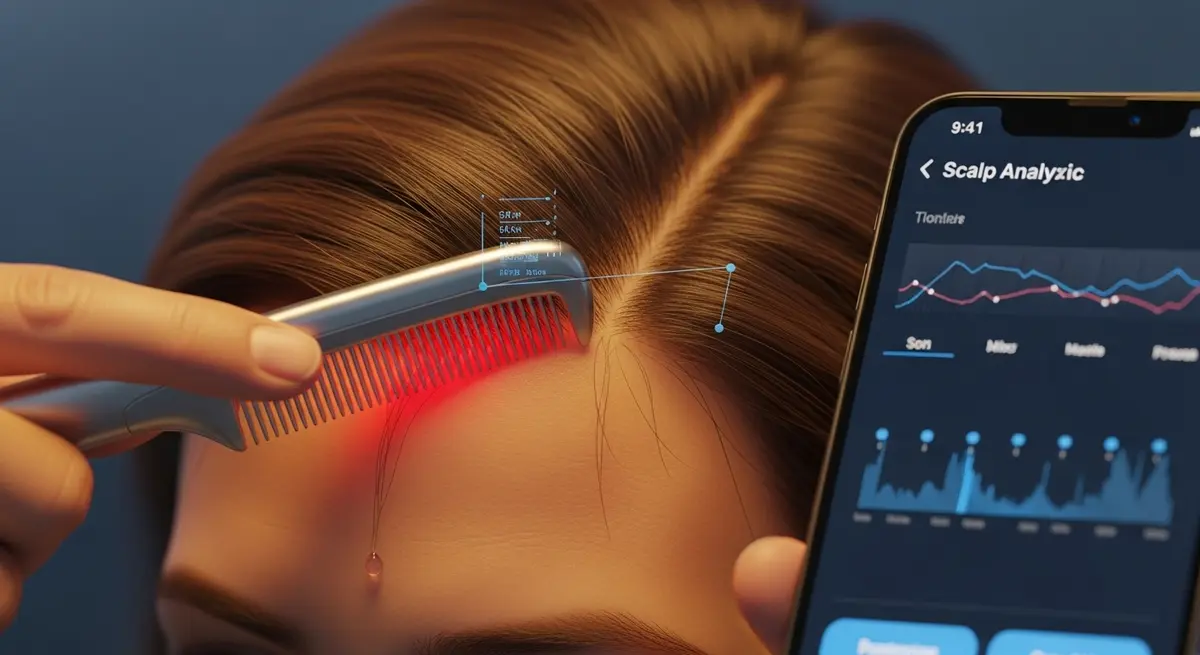
Low-level light therapy (LLLT) — marketed as LED or red‑light therapy for hair — is the best‑studied hardware modality in consumer smart haircare. Over the past decade multiple randomized controlled trials and several meta‑analyses have reported consistent improvements in objective hair measures when devices are used as directed. Reported outcomes vary by device type, wavelength, dose and population, but aggregated results from systematic reviews between roughly 2014–2020 show typical hair‑density gains in the neighborhood of the mid‑teens to low‑30s percent range (commonly summarized as ~15–35% increase in hairs/cm² or total count over baseline) and increases in terminal hair diameter often around 10–25%. Effect sizes reported in pooled analyses are generally moderate to large, which supports a real physiologic response rather than a pure placebo effect — particularly for androgenetic (pattern) thinning.
Study designs matter. High‑quality randomized controlled trials (RCTs) measure endpoints with blinded phototrichogram or macrophotography and report changes in hairs per cm², percent terminal vellus conversion, and mean hair shaft diameter. Smaller or industry‑sponsored studies sometimes use investigator‑graded photographs or self‑reported improvements, which are more vulnerable to bias. When looking at published data, check whether trials were randomized, placebo‑controlled and blinded, how many participants completed the protocol, and whether outcomes were measured objectively (imaging + software) rather than by questionnaire alone.
AI scalp scanners and sensor suites are an evolving field. Several validation studies and manufacturer white papers show good intra‑device repeatability (the scanner gives consistent results on the same scalp area) and promising concordance with dermatologist assessments for features such as hair density, follicular unit counts and scalp erythema. However, there are far fewer large, independent RCTs proving that AI‑driven diagnostics change outcomes (for example, by improving treatment selection or adherence). Most current evidence for AI scanners is diagnostic: accuracy, sensitivity/specificity and inter‑rater agreement against clinical grading. That means scanners are useful for monitoring and visualizing trends, but their ability to deliver superior clinical outcomes still needs broader prospective validation.
Safety, certifications and what they mean
-
FDA clearance vs approval: Many consumer LLLT devices for hair are FDA‑cleared via 510(k) pathways for treatment of androgenetic alopecia. Clearance indicates the agency found the device substantially equivalent to a predicate device and deemed it safe and effective for the indicated use — it is not the same as FDA approval for novel drugs. For non‑medical wellness gadgets, manufacturers may instead register with regulatory bodies or claim general wellness status.
-
European CE marking / MDR: CE marking under the Medical Device Regulation signals conformity with applicable EU safety and performance rules; the scope depends on the device classification and the notified body that reviewed it. CE marking demonstrates regulatory compliance in the EU market but does not by itself quantify clinical efficacy.
-
International standards: Look for adherence to electrical and laser safety standards such as IEC 60601 (safety of medical electrical equipment) and IEC 60825‑1 (laser safety classification) where relevant. ISO 13485 indicates a quality management system for medical device manufacturing; ISO compliance and independent test reports add confidence about manufacturing controls and consistency.
-
Laser/LED class and labeling: Devices should state their laser/LED class and operational parameters (wavelength in nm, irradiance or power density in mW/cm², and recommended treatment duration/frequency). Correct labeling helps clinicians and consumers evaluate delivered dose against published trials.
Common and uncommon side effects
LLLT and LED combs are generally well tolerated. The most commonly reported reactions are transient and mild: scalp warmth, itching, erythema (mild redness), or temporary increased hair shedding in the early weeks as follicles cycle. Headache or eye discomfort is possible if the device is misused (direct eye exposure to strong light sources). Rarely, people with photosensitivity disorders or on photosensitizing medications may experience exaggerated reactions. Active scalp infections, open wounds, or suspicious lesions are contraindications to device use until evaluated by a clinician. When in doubt, consult a dermatologist prior to starting treatment.
Reading manufacturer claims versus validated results
-
Published evidence: Prefer devices with peer‑reviewed, independent RCTs or inclusion in meta‑analyses. Claims backed only by in‑house tests, marketing photos or customer testimonials carry far less weight.
-
Study populations and endpoints: A device that showed benefit in a small RCT of men with mild‑to‑moderate androgenetic alopecia may not perform the same in women with diffuse telogen effluvium or in people with scarring alopecia. Confirm the trial demographic matches your situation.
-
Dose and protocol matching: Many studies report benefit with specific wavelengths, power densities and treatment schedules (for example, fixed sessions 3–5 times per week for multiple months). A manufacturer claim that omits treatment parameters or suggests “faster” results without trial data should be treated skeptically — benefits are dose‑dependent.
-
Independent replication: One study is interesting; multiple independent studies showing consistent outcomes are persuasive. Pay attention to trial size, duration (3–6 months is common for initial endpoints, longer for durability) and who funded the research.
Practical takeaways
-
LLLT currently has the strongest RCT and meta‑analytic support among at‑home smart hair tools for pattern thinning — expect modest but measurable gains in density and thickness over months when devices are used as studied.
-
AI scalp scanners are excellent monitoring and personalization tools today; they reliably document change and can improve adherence by visualizing progress, but widespread prospective outcome trials are still catching up.
-
Verify safety marks (FDA clearance, CE marking, ISO/IEC standards), check that device specifications align with published trial parameters, and favor products with peer‑reviewed evidence or independent validation studies.
-
Treat manufacturer marketing claims as starting points, not guarantees: confirm the underlying study type, population, endpoints and funding before equating a glossy claim with clinical effectiveness.
When matched with realistic expectations and medical advice for significant hair loss, smart haircare devices can be a safe, evidence‑informed part of a hair‑health plan.
Choosing & Using Smart Haircare: Practical Buying Guide, Privacy and Routine Integration
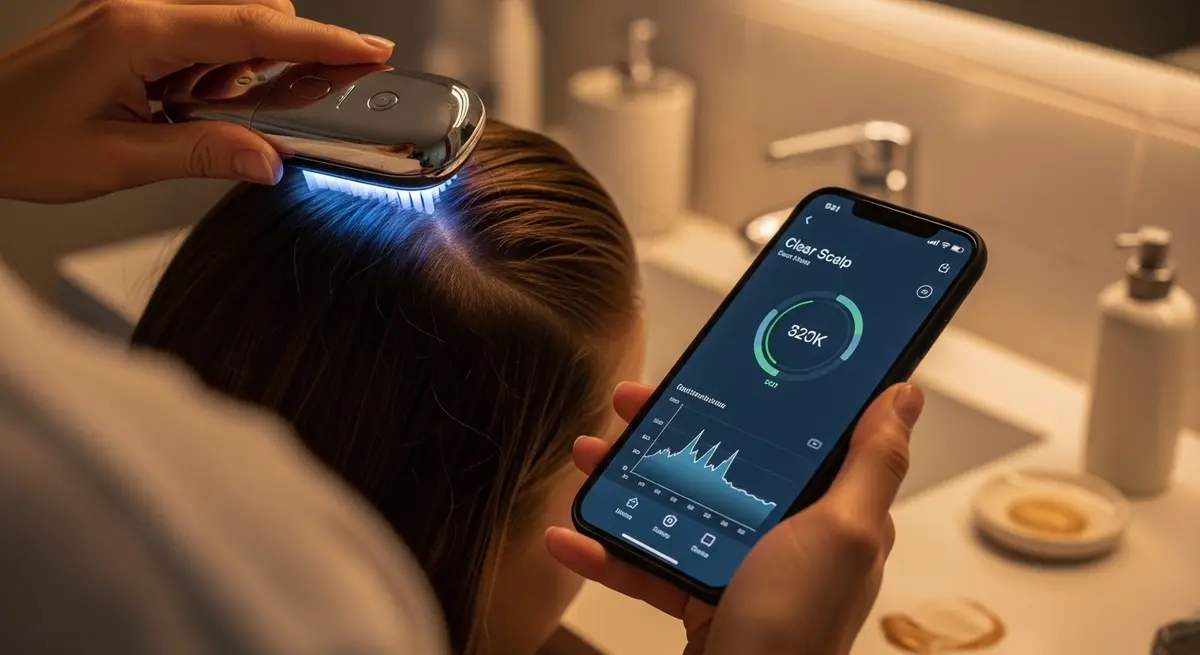
Smart haircare products span a surprising range: from simple LED combs and wearable headbands to multisensor scalp scanners and smart brushes that count strokes and measure oil levels. Picking a device that actually helps requires separating attractive design and marketing from measurable performance. The checklist below walks through what matters most — sensors and measurement, clinical validation and certifications, ergonomics and app quality, plus practical guidance on expected timelines, cleaning, and how to integrate devices with topical treatments and everyday scalp care.
1) Sensors & what they really measure
- Optical / multispectral imaging: captures hair density, pigment and sometimes superficial scalp color changes. Useful for tracking hair count and visible thinning patterns over time.
- Photodetectors / phototrichogram-style systems: estimate hair miniaturization and shaft diameter from repeated images under controlled lighting.
- Impedance / moisture sensors: give a proxy for scalp hydration and sebum levels. These are helpful for routine monitoring but are indirect measures and depend on contact quality.
- Temperature and inflammation sensors: can flag hotspots or irritation after treatments or product reactions, though they don’t diagnose underlying causes.
- Accelerometers and stroke counters (smart brushes): track mechanical stress and brushing habits that may contribute to breakage.
Practical tip: prioritize devices that combine more than one sensor type for cross-checked results (for example, imaging plus sebum measurement) rather than relying on a single metric.
2) Clinical validation and realistic evidence
Look for devices that cite peer-reviewed randomized controlled trials (RCTs) or meta-analyses. For LED/low-level light therapy (LLLT), the strongest clinical evidence comes from RCTs and pooled analyses showing statistically significant gains in hair density and thickness versus sham devices. Typical trial protocols and real-world recommendations converge on session lengths of roughly 10–30 minutes, about 3–5 times per week, with early improvements sometimes seen at 4–6 weeks, noticeable differences by 8–12 weeks, and more substantial results after 3–6 months of consistent use. Meta-analyses report average increases in hair counts on the order of about 10–25 hairs/cm² over several months in treated groups — useful context when vendors quote percent improvements.
When a product claims clinical backing, check whether the trial used the same device model, whether the study was randomized and blinded, and how outcomes were measured (phototrichogram, blinded photography, participant-reported change). Many viable AI scalp scanners and monitoring tools are validated for reliability (consistent readings) more than efficacy (treatment effect), so treat monitoring and therapeutic claims separately.
3) Safety and certifications to check
- FDA: distinguish FDA 510(k) clearance (device reviewed for a specific indication) from simple FDA registration (manufacturer listed). Clearance is stronger evidence of device safety/efficacy claims.
- CE marking: indicates conformity with European safety standards and is required for sale in the EU.
- IEC/laser and photobiological standards: look for compliance with IEC 60825-1 (laser safety) and IEC 62471 (photobiological safety) for light-emitting devices.
- Quality systems and material safety: ISO 13485 (medical device quality management) and RoHS indicate manufacturing and materials standards.
Side effects for properly certified, consumer-grade devices are usually mild and transient: scalp warmth, slight redness, tingling, or temporary dryness. Serious adverse events are rare with low-level LED systems, but anyone with photosensitivity, active scalp infection, or who is taking photosensitizing medication should consult a clinician first.
4) Ergonomics, battery life and real-world usability
A device that stays in the drawer won’t help. Evaluate:
- Form factor: comb, headband, brush or handheld scanner — choose what fits your routine and hair length.
- Weight and grip: lighter devices with non-slip handles are easier for daily use.
- Coverage: how many LEDs or sensor zones cover the scalp in a single pass? More coverage reduces treatment time and increases repeatability.
- Battery life and charging: full-charge time and number of sessions per charge matter if you travel or prefer shorter daily sessions.
- Cleaning: waterproofing rating (IPxx) and detachable parts make sanitizing simpler.
5) App quality, data privacy and interoperability
A strong app turns raw measurements into trends, not noise. Prefer apps that:
- Show baseline comparisons and longitudinal charts (weekly or monthly views).
- Export anonymized data or let you download CSVs for your healthcare provider.
- Provide transparent privacy policies: where is the data stored (local vs cloud), who has access, and is it encrypted at rest and in transit?
Privacy red flags: vague or missing data-deletion options, mandatory cloud-only storage without clear security details, or selling data to third parties. If the app asks for unnecessary permissions (contacts, media) that aren’t essential for device operation, that’s another warning sign.
6) How to evaluate marketing claims
If a company promises dramatic regrowth in a few weeks or guarantees full reversal of genetic hair loss, treat it skeptically. Evidence-based statements will cite study designs, timeframes, and endpoints (e.g., “randomized, double-blind trial, 24 weeks, mean increase X hairs/cm²”). Claims that sound too good to be true often are. Ask whether the study population (gender, age, stage of thinning) matches your situation.
7) Typical LED treatment schedules and what to expect
- At-home LED devices: 10–30 minutes per session, 3 times per week is a common protocol; some devices recommend daily shorter sessions.
- Clinic professional devices: fewer but longer sessions (often once or twice weekly) administered by trained staff.
- Expect early reductions in shedding within the first 4–8 weeks for some users and clearer improvements in hair thickness/density by 3–6 months. Continued maintenance use is usually needed to sustain benefits.
8) Maintenance, cleaning and safe storage
- Wipe contacts and LEDs with a soft, lint-free cloth and a 70% isopropyl wipe after each use if the manufacturer allows. Avoid submerging non-waterproof units.
- Detachable comb teeth or brush heads should be removed and cleaned weekly to prevent product build-up that skews sensors.
- Store in a cool, dry place away from direct sunlight. Follow manufacturer recommendations for battery care and firmware updates.
9) Combining devices with topical treatments and scalp-care routines
Devices and topicals can be complementary but coordinate timing:
- Use scanning/monitoring tools before applying sticky, reflective serums so images and sensors read accurately.
- LED therapy is often combined with minoxidil or other topicals in trials; allow topical products to fully absorb before using an LED device to avoid interference with light delivery.
- Mechanical tools (heated brushes, tight styles) increase breakage risk; monitor mechanical stress with a smart brush and adjust technique.
If you’re refining cleansing or product routines alongside tech tools, follow a balanced scalp-cleansing routine that avoids overstripping oils and damaging the barrier — that kind of practical guidance is discussed in a detailed review of scalp-cleansing trends and safe routines that pairs well with device-based monitoring: balanced scalp-cleansing routine.
10) A step-by-step buying checklist
- Identify your primary goal (monitoring vs treatment). Monitoring needs consistent imaging and exportable trends; treatment needs clinical evidence (especially for LLLT).
- Confirm the sensor types and whether multiple modalities are combined.
- Check published validation (RCTs, peer-reviewed articles) and verify the study used the actual device model where possible.
- Verify safety marks: FDA 510(k) clearance if marketed as treatment in the U.S., CE for EU, IEC photobiological standards, and reputable quality-system certifications.
- Test ergonomics and app UX (trial periods, return policy) — choose what you’ll actually use.
- Review privacy policy and data controls; prefer local data options or strong encryption and deletion rights.
- Ask about maintenance parts, replacement heads and expected lifespan before purchase.
Final cautions and pragmatic mindset
Smart haircare is valuable for tracking trends and applying evidence-based adjuncts like LED therapy, but it is not a substitute for medical diagnosis. LED/LLLT has the best randomized-trial backing for androgenetic thinning, while AI scanners and smart brushes are excellent for monitoring habits and personalization but still need broader outcome validation. Use certified devices, follow evidence-based schedules, and consult a dermatologist for persistent, rapid, or severe hair loss.
Practical success comes from pairing the right device with realistic expectations, consistent use, and a sensible scalp-care routine — not from one-off gadgets or overpromised marketing.
Conclusion
Smart haircare devices offer practical, data-driven ways to monitor scalp health and support hair goals—when matched with scientific validation and realistic expectations. LED therapy has the strongest RCT backing for androgenetic hair thinning; AI scanners and smart brushes excel at monitoring and personalization but still need broader validation. Use certified devices, follow evidence-based schedules and consult a dermatologist for persistent or severe hair loss.
Want evidence-backed device recommendations and step-by-step routines? Explore smart haircare devices and guides at RelexaHub.