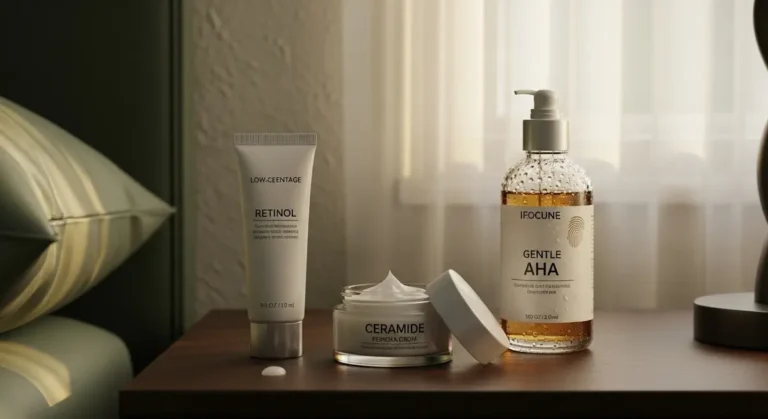
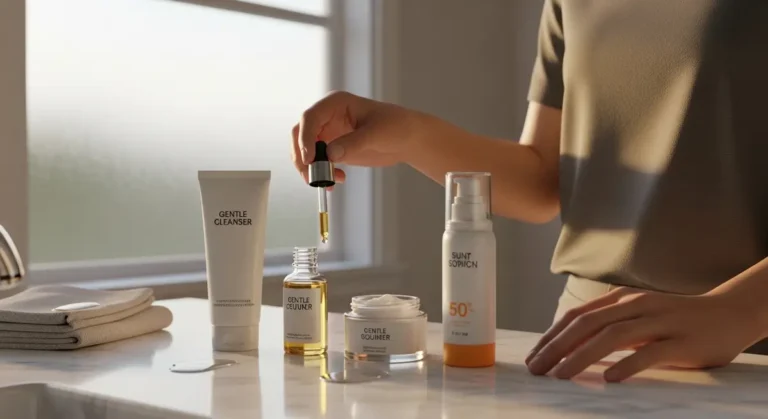
In 2025, skin minimalism — often called “skinimalism” — has moved from social trend to mainstream philosophy. For modern professionals and eco-conscious consumers, simplicity and sustainability are the new marks of luxury: fewer, smarter products, clear ingredient choices, and routines that support skin health rather than overwhelm it. This article explains why the skin minimalism trend dominates the global market, what dermatologists recommend, and how to adopt a beautiful, sustainable routine that fits a busy life.
What Is the Skin Minimalism Trend and Why It Matters

Skin minimalism — often called skinimalism — is a philosophy as much as a routine: intentional reduction of products, clearer ingredient choices, and a focus on skin health instead of perpetual consumption. In 2025 this approach has become mainstream, embraced by busy professionals who prize time and simplicity, and by eco-conscious consumers who see fewer products as both kinder to skin and kinder to the planet. Minimalist beauty reframes luxury as thoughtful restraint: multifunctional formulations, transparent sourcing, and routines built around evidence-backed essentials.
Several cultural forces pushed skin minimalism into the spotlight. After years of “skin stacking” — elaborate regimens with dozens of products — social media fatigue and a growing wellness movement encouraged people to question excess. Platforms like short-form video amplified intimate, honest narratives about irritation, product overload, and the benefits of pared-back routines. At the same time, climate awareness and economic pragmatism made refill models, multipurpose treatments, and longer-lasting formulations financially and ethically attractive. By 2025, brands and dermatologists alike began to promote simplicity as a sophisticated choice rather than a compromise.
Dermatology explains why less often works better. The skin’s outermost layer, the stratum corneum, relies on a precise balance of lipids, natural moisturizing factors, and structural proteins to keep moisture in and irritants out. Over-cleansing, mixing too many actives, or applying incompatible formulations can disrupt that barrier, causing dryness, redness, and sensitivity. Simplifying a routine reduces cumulative irritant exposure and minimizes ingredient interactions that can inflame or sensitize skin.
The skin microbiome — the complex community of microbes living on the skin — is another reason to choose fewer products. Excessive exfoliation and harsh surfactants can strip beneficial microbes, leaving space for opportunistic organisms and increasing the risk of inflammation. Minimalist routines that emphasize gentle cleansing, balanced pH, and prebiotics or probiotics (where appropriate) support microbiome resilience and long-term skin balance.
A core tenet of minimalist beauty is prioritizing evidence-backed actives and ingredient literacy over novelty. Ingredients with consistent clinical support — like ceramides for barrier repair, niacinamide for tone and inflammation control, peptides for resilience, and broad-spectrum sunscreen for aging prevention — become the foundation of a concise routine. Knowing a few essentials, understanding their concentrations and conditions for use (pH, layering order, sun sensitivity), and choosing multifunctional formulas means better outcomes with fewer jars on the shelf.
Minimalism also celebrates natural, sustainable self-care without romanticizing “clean” labeling. Sustainability here looks like refillable glass bottles, biodegradable secondary packaging, and concentrated formats that reduce shipping weight. It also looks like slowing down: fewer impulse buys, thoughtful sampling strategies, and supporting brands that disclose ingredient sources and clinical evidence. Those choices align with a modern definition of luxury — time, transparency, and integrity — tailored to professionals and eco-aware shoppers.
Importantly, minimalism is not the same for everyone. A pared-back routine for an oily, acne-prone person might still include targeted benzoyl peroxide or a prescription retinoid, while a sensitive skin approach might prioritize ceramide-rich moisturizers and a single gentle antioxidant. The guiding principle is intentionality: select the smallest set of products that reliably address skin goals, respect barrier function, and fit daily life.
In practice, adopting skin minimalism means learning ingredient literacy, listening to your skin’s responses, and choosing multifunctional, sustainably made formulations. The payoff is practical and visible: fewer flare-ups, less waste, easier travel, and a beauty practice that feels calm, effective, and aligned with broader environmental values. For modern professionals and eco-conscious consumers, the skin minimalism trend is a cultural and clinical recalibration — a move from accumulation to care, from novelty to evidence, and from noise to nourishing simplicity.
Sustainable Skincare and the Market Forces Behind Minimalist Beauty
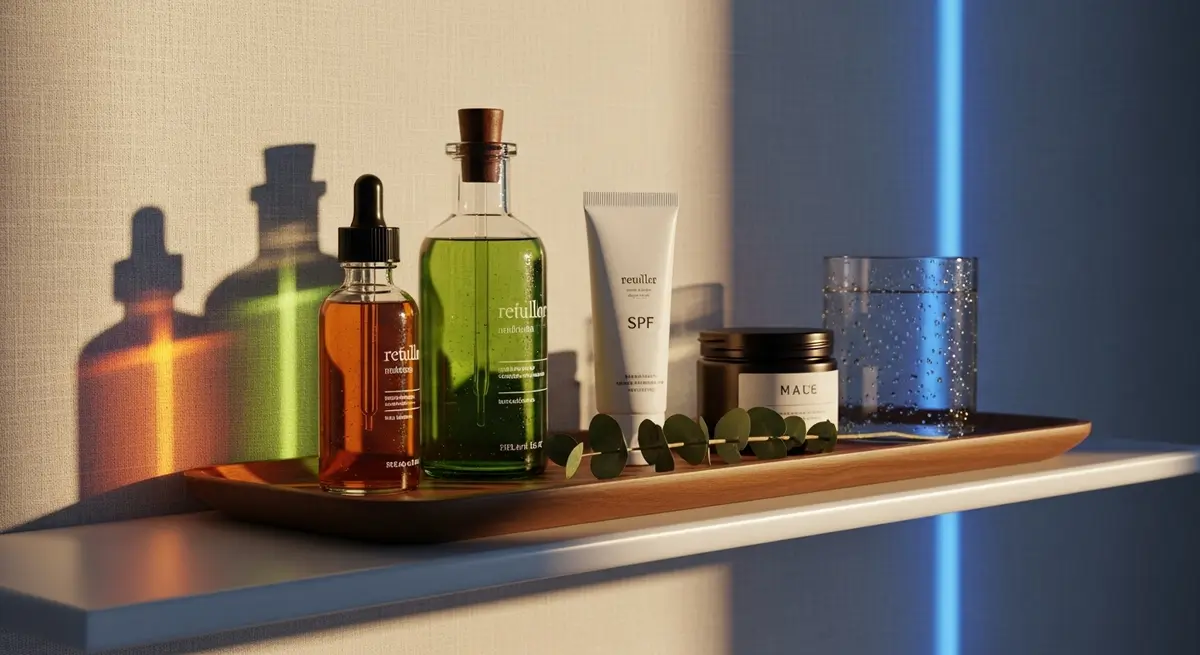
Sustainability and simplicity have converged to reshape how the global beauty industry defines luxury. What was once a niche conversation about clean ingredients has become a full-scale market transformation: the skin minimalism trend now rewards brands that deliver fewer, smarter products packaged and produced with clear environmental and ethical intent. For modern professionals and eco-conscious consumers, minimalism is no longer austerity—it’s a curated expression of performance, provenance, and planetary care.
Market momentum is real and measurable. By 2024 the sustainable beauty and skincare segment reached roughly $190.7 billion globally, and long-term forecasts point to continued expansion driven by demand for responsible products (data anchored to 2024 market reporting). Analysts project robust growth in the coming decade, reflecting an 8–9% compound annual growth trajectory for sustainably positioned lines. Two correlated statistics illustrate the shift: multifunctional products—formulas that combine hydration, protection, and treatment—grew about 12% in 2024, and more than 70% of consumers in North America and Europe reported that ingredient transparency influences their buying decisions (2024 surveys). These numbers aren’t abstract; they explain why refill programs, compostable materials, and no-nonsense formulations are now strategic priorities across the industry.
Refill models and circular packaging are practical responses to both consumer values and regulatory pressure. Leading players from multinational groups to indie brands have launched refillable ranges and collection-return programs. Refillable and reduced-packaging SKUs posted double-digit sales growth in major Western markets in 2024, while adoption accelerated in Asia-Pacific as eco-conscious purchasing broadens. The business case is straightforward: refill systems lower per-use cost and environmental footprint, increase customer lifetime value through subscription and return incentives, and create a premium narrative around thoughtful consumption.
Biodegradable and recyclable materials are no longer a boutique differentiator. Brands are investing in bioplastics, compostable outer cartons, and minimalist glass designs that signal longevity. This tactile language of sustainability—heavy glass jars designed for long-term reuse, simple labels that favour longevity over seasonal branding—aligns with the minimalist beauty aesthetic: calm, honest, and built to last.
Multifunctional formulations are the product-side manifestation of the trend. Combining evidence-backed actives such as ceramides, niacinamide, and broad-spectrum SPF into streamlined formats reduces step-count and, importantly, exposure to unnecessary or potentially irritating ingredients. Dermatologists increasingly support curated routines with fewer products because they reduce the chance of irritation, over-stripping, and microbiome disruption—outcomes especially relevant to sensitive and reactive skin. Thoughtful formulations that prioritize barrier support and clinically validated actives reinforce the idea that less can be more, if the ‘less’ is smarter.
Ingredient transparency and traceability are the trust engines of minimalist beauty. Consumers want to know not only what’s in a product but where it came from and why it matters. Over the past two years, brands have responded with clearer labeling, third-party certifications, and traceable ingredient stories. This accountability is transforming buying behavior: transparent products command higher price points and stronger loyalty because they reduce perceived risk and align with ethical values.
Industry responses show how sustainable business models elevate minimalism into a modern luxury. Large groups have published roadmaps—targets for circular packaging and ingredient stewardship—while smaller brands leverage direct-to-consumer refill stations, concentrated formulas (to reduce shipping weight), and subscription-based replenishment to guarantee convenience. Examples include multinational pledges to expand refill offerings and niche brands pairing clinical research with low-waste packaging to justify premium positioning. For professionals advising clients, these developments make it easier to recommend routines that meet both clinical goals and environmental values.
Ultimately, sustainability has redefined what luxury in skincare means. It is no longer only about rarity or price; it’s about considered design, measurable impact, and products that earn their place on a crowded shelf. The skin minimalism trend is a cultural and commercial pivot toward purposeful consumption: multifunctional, transparent, and circular. For anyone balancing a busy life with an ethical outlook, the payoff is clear—fewer products, stronger results, and a smaller footprint.
Key takeaways: prioritize multifunctional, dermatologist-backed actives; choose refillable or biodegradable packaging when possible; and value transparent sourcing and measurable sustainability claims. Minimalist beauty that respects both skin and planet is now a marker of thoughtful luxury—one that professionals and eco-conscious consumers can confidently invest in.
Build Your Skinimalist Routine: Practical Steps for Busy, Eco-Conscious Lives
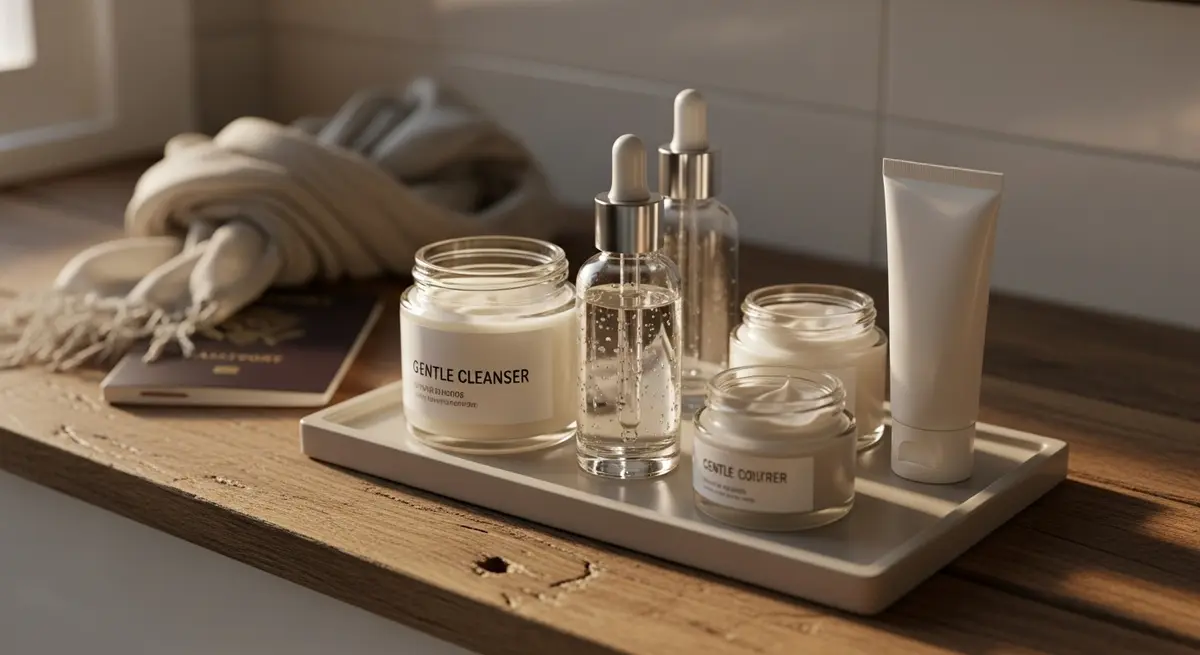
Simplicity that performs feels luxurious because it makes time, money, and the planet part of the beauty equation. The skin minimalism trend champions fewer, smarter products chosen for barrier support, targeted benefit, and low environmental footprint. The goal: a short, dependable routine built on multifunctional formulations and evidence-backed ingredients that play well together — so busy schedules and travel don’t undo progress.
Core product types to build around
- Gentle cleanser: Choose a low-foam or balm cleanser that removes impurities without stripping natural oils. Cleansing should reset the skin without provoking tightness or irritation.
- Targeted serum: One focused serum lets you address a primary concern — hydration, pigmentation, or fine lines — without a crowded medicine cabinet. Pick a stable, proven active you’ll use consistently.
- Moisturizer (barrier repair focus): A formula with occlusive and humectant balance helps protect and restore the skin barrier; look for ceramides and gentle emollients.
- Sunscreen: Daily broad-spectrum SPF is non-negotiable. Seek lightweight, cosmetically elegant textures you’ll actually wear every day.
Ingredient checklist (what to prioritize and why)
- Ceramides — foundational for barrier repair and long-term resilience.
- Niacinamide — versatile: supports barrier function, reduces redness, and evens tone (commonly effective in the 2–5% range).
- Peptides — gentle, building-block ingredients that support firmness and repair pathways over time.
- Prebiotics/probiotics/postbiotics — promote microbiome balance and soothe reactive skin when formulated appropriately.
Multifunctional ingredients and hybrids reduce steps: antioxidant serums that pair well with SPF in the AM, or moisturizers with built-in SPF for low-exposure days. Concentrated serums can replace multiple lighter treatments, lowering packaging waste and cost-per-use.
Sample morning routine for busy professionals
- Cleanse: Quick rinse or a gentle cleanser to remove night-time products and excess oil.
- Antioxidant or targeted serum: If you use vitamin C or a brightening serum, apply now to protect against daytime oxidative stress.
- Lightweight moisturizer: If your skin needs it; for oily types a hydrator or niacinamide-containing lotion may suffice.
- Sunscreen: Last step. Reapply throughout the day when exposed to sunlight.
Simple evening routine for skin repair
- Double-cleanse only if wearing heavy makeup or SPF: oil/balm followed by a gentle water-based cleanser.
- Targeted treatment: Retinoid or peptide serum at night (introduce slowly and never combine strong exfoliating acids with a retinoid without guidance).
- Moisturizer: A nourishing, fragrance-free formula with ceramides and humectants to support overnight repair.
Travel- and budget-friendly strategies
- Decant and consolidate: Transfer concentrated serums and creams into small reusable travel containers to cut weight and waste.
- Choose multi-use heroes: A cleansing balm that removes makeup and cleanses, a moisturizer with antioxidant benefits, or a tinted SPF can cover several needs in one product.
- Solid formats and refill programs: Solid cleansing bars and powdered cleansers reduce plastic; refillable jars and subscription refills reduce long-term packaging and often cost less per use.
- Shop for value, not volume: Evaluate cost per application and favor concentrated formulas — a small drop of serum can last months when used correctly.
Dermatologist-backed troubleshooting for sensitive or reactive skin
- Patch test new actives: Apply a small amount to the inner forearm or behind the ear and watch for 24–48 hours for signs of irritation.
- Introduce one active at a time: Slow, measured introduction helps identify sensitivities and avoids overwhelming the barrier.
- Prioritize barrier repair over aggressive exfoliation: If skin is reactive, reduce or pause acids/retinoids and emphasize ceramides, glycerin, and lightweight occlusives.
- Look for fragrance-free and low-irritant formulations: Fragrance and certain essential oils are common causes of irritation.
- Layering order matters: Apply products from thinnest to thickest; sunscreen always goes last in the morning.
- When to seek help: Persistent burning, widespread redness, blistering, or swelling warrants professional evaluation; for chronic conditions (eczema, rosacea) work with a dermatologist to tailor minimal yet effective care.
Decision-making checklist for sustainable purchasing
- Function over novelty: Prefer multifunctional products that reduce the number of bottles you buy and discard.
- Packaging and refillability: Opt for refill programs, recycled materials, or concentrated formats with minimal packaging.
- Transparency: Favor brands that disclose ingredient sources and manufacturing standards.
- Ethical and practical resale: Buy what you will use consistently — a single effective serum used daily outperforms a shelf of specialty items.
A minimal routine rooted in barrier health, consistent sunscreen use, and smart ingredient choices delivers better results than a cluttered regimen. Small, intentional swaps — a refillable moisturizer, a concentrated serum, and a reliable sunscreen — preserve both skin and resources, letting modern professionals and eco-conscious consumers treat beauty as a sustainable daily practice. For a practical guide to simplifying your daily routine that includes step-by-step advice and product suggestions, check out a practical guide to simplifying your daily routine that walks readers through the transition to fewer, more effective products: practical guide to simplifying your daily routine.
Consistent choices beat constant change: build slowly, measure results, and prioritize formulations that support long-term skin health and the planet.
Conclusion
Skin minimalism is more than a trend — it’s a practical, science-informed shift toward fewer, higher-quality products that honor both skin health and the planet. For modern professionals and eco-conscious consumers, minimalism reframes luxury as thoughtful choices: multifunctional formulations, transparent sourcing, and dermatology-backed routines. By simplifying intentionally and choosing sustainable options, you can protect your skin barrier, reduce waste, and enjoy a calmer, more effective beauty practice.
Read more about minimalist beauty. Find practical routines, sustainable brand picks, and dermatology-backed tips at Explore minimalist beauty at RelexaHub.